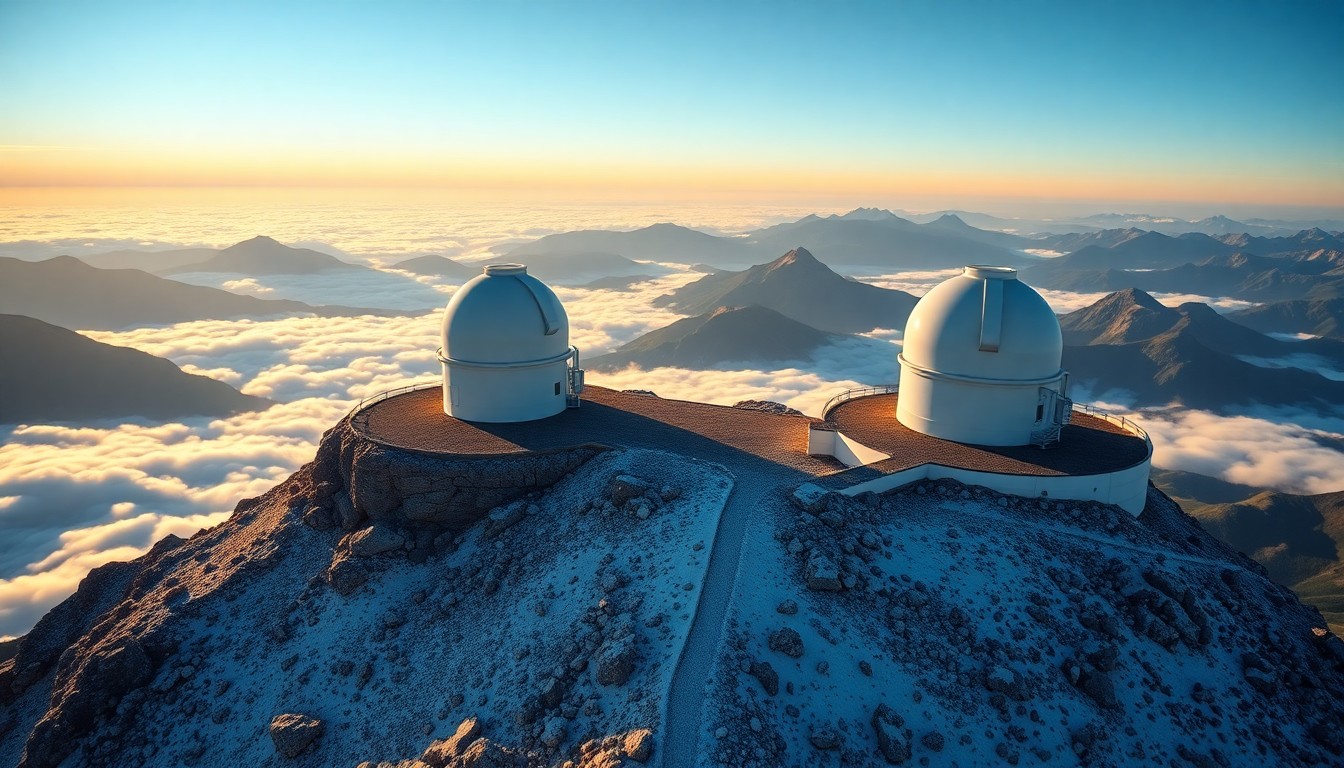
At 2,877 metres, the Pic du Midi de Bigorre is the only summit in the Pyrenees you can reach by cable car, have dinner on, and sleep on. It is also a working astronomical observatory, in operation since the late nineteenth century, perched on an isolated ridge above the whole range.
The question everyone asks is simple: is it really worth the price of the ticket? An honest answer below, along with the two ways up, what there is to see, and why a night at the summit is in a category of its own.
Why this summit is different
The Pic du Midi is nowhere near the highest peak in the Pyrenees. Its strength lies elsewhere: it stands isolated, thrust out in front of the main chain, which gives it a panorama that higher summits, hemmed in among their neighbours, simply do not have.
On a clear day the view runs along hundreds of kilometres of ridgeline and out across the plain as far as Toulouse. It was precisely this detached position that justified building the observatory.
The Pic du Midi observatory is a real scientific site, not a backdrop. The Moon was mapped from here in preparation for NASA’s Apollo missions. It houses the Bernard Lyot Telescope, a two-metre instrument and the largest optical telescope in mainland France.
The summit also sits at the heart of France’s first International Dark Sky Reserve: light pollution is controlled across a wide perimeter, which is why the night sky here is what it is.
Up by cable car
This is how the vast majority of visitors arrive.
The cable car leaves from La Mongie (around 1,800 m), a ski resort in the Grand Tourmalet area at the foot of the famous pass. The ride runs in two sections and takes a little under fifteen minutes. The final section, where the cabin pulls away from the rock face, is worth the trip on its own.
A few practical points, because they make the difference:
- Book ahead in high season. Time slots sell out, and turning up at the ticket office on an August morning without a booking can cost you two hours.
- The site closes for maintenance, usually in spring and autumn, for several weeks. Check the calendar before fixing your dates: this is the classic mistake.
- Look at the summit forecast, not the valley’s. Going up into cloud means paying to look at grey. There is a webcam — check it the same morning.
Bring a warm jacket, even in August. At 2,877 metres it is routinely fifteen degrees colder than in the valley, and the wind is unforgiving.
What there is to see up there
The summit is laid out as a genuine visit, easily filling two to three hours:
- The panoramic terraces, on several levels, with orientation tables. This is the heart of it.
- The “Ponton dans le Ciel”, a metal walkway suspended over the void. Thrill guaranteed; nothing to fear but your own legs.
- The domes and the museum spaces, telling the story of the observatory and the work still done there.
- A planetarium and astronomy activities.
- A restaurant with the best view in the region, no serious competition.
Sleeping at the Pic du Midi
This is the part few people know about, and the one that justifies this guide on its own.
The Pic du Midi lets you spend the night at the summit. The principle: you go up in late afternoon, the last cable car takes the day visitors back down, and the summit empties. What is left is you, a handful of others, and the staff.
Roughly how it goes: sunset over the range from the terraces, dinner at altitude, then stargazing with instruments and guidance — you are in a dark sky reserve, on a summit, at nearly 2,900 metres. The Milky Way is not an abstraction here; it is overhead. You sleep on site, and wake for sunrise alone above the Pyrenees.
It is not cheap, and that should be said plainly: it is an expense. But of everything the Pyrenees offer, it is probably the most singular experience — and the only one you cannot have anywhere else in France.
Book far ahead. Places are few, and clear-weather nights go quickly. Check the site’s policy on bad weather before booking.
Walking up the Pic du Midi
Yes, it can be done on foot, and it is a fine outing.
The start is the Col du Tourmalet (2,115 m), reachable by car in summer (the pass road closes in winter, which rules this out from November to May).
- Ascent: about 760 m
- Time: 2 to 2.5 hours up
- Difficulty: a sustained hill walk, but no technical difficulty, on the service track and paths
You climb facing the summit and its antennae, with the view opening progressively. The clever formula: walk up, ride down (a descent-only ticket exists, but check the conditions and the last departure before you set off — being at the top at closing time, with no ticket and tired legs, means walking all the way back down).
The Col du Tourmalet is, of course, a monument of professional cycling. In summer you will share the road with a great many bikes: be patient and careful.
The Pic du Midi in winter
The cable car runs in winter, and the snow-covered summit above a sea of cloud is spectacular.
It is also the launch point for a legendary off-piste descent: from the summit down to La Mongie, with over 1,000 metres of vertical on ungroomed terrain. This is genuine off-piste, to be done with a guide and the safety equipment that goes with it. It is not a marked run, and it should not be taken lightly.
As for the rest of the ski area, Grand Tourmalet (La Mongie – Barèges) is one of the largest in the French Pyrenees — see our comparison of the best ski resorts in the Pyrenees and our guide to snow conditions.
So, is it worth it?
Yes, on three conditions:
- That the sky is clear. This is non-negotiable. A Pic du Midi in cloud is an expensive disappointment. Push it back a day rather than force it.
- That you take your time. Going up, taking three photographs and coming down is missing the point. Allow half a day.
- That you go early or late. Midday light flattens the relief. At either end of the day, the range sculpts itself.
If you only do one thing at the Pic du Midi, spend the night.
Where to stay below
La Mongie, at the foot of the cable car, is the most practical option — it is a ski resort, so functional rather than charming.
For more character, Bagnères-de-Bigorre, Barèges or Argelès-Gazost make excellent bases, thirty to fifty minutes away, and let you range across the rest of the valley, including Cauterets and the Lac de Gaube.
Frequently asked questions
How high is the Pic du Midi de Bigorre? 2,877 metres.
How long does a visit take? Allow 2 to 3 hours at the summit, plus around thirty minutes of cable car each way. Half a day is the right format.
Can you walk up? Yes, from the Col du Tourmalet: around 760 m of ascent and 2 to 2.5 hours up, in summer only (the pass road closes in winter).
Can you sleep at the summit? Yes. The site offers a night at the observatory with dinner, stargazing and sunrise. Places are limited; book well in advance.
Do I need to book the cable car? In high season, and for the overnight stay, it is strongly advised and effectively essential.
What about prices and opening times? They change every season, and the site closes for technical maintenance at certain periods. Always check the official Pic du Midi website before travelling.